Monday, November 14, 2011

AFS in the (Alyeska) house!

Aw yeah, fisheries nerds, it's that time of year again! The Alaska Chapter of the American Fisheries Society is having their annual meeting this week. This year it's being held at the Alyeska Resort in Girdwood (a suburb of Anchorage, if you will). The theme is

Fisheries in Today’s Alaska:
Integrating Fish, Habitat, and People

I'm not able to attend this year, but I can tell you which presentations I'd be heading for if I was:

Marine Invertebrates in Alaska
chaired by Joel Webb
Friday, beginning at 8:40 AM!

Pribilof Domain King Crab Habitat Mapping Pilot Project: Demonstrating Efficacy of Multibeam Sonar Technology for Multiuse Seabed Mapping - Michelle Ridgway, Christopher Popham, Christopher Merculief, and Peter Hickman

Phylogeography of Red King Crabs in Alaskan Waters - W. Stewart Grant and Wei Cheng

Molt Timing and Soft Shell Handling Levels for Male Dungeness Crabs in Southeast Alaska - Gretchen H. Bishop

Hybrid Chionoecetes in the Bering Sea: What We Know and What We Don’t Know - Dan Urban (remember hearing about hybrids here?)

(Read abstracts here.)

There are also some non-crustacean SFOS students presenting, so if you're there, make sure you head to the student presentations too! Which talks were your favorites??

Friday, November 11, 2011

It coulda been a contender

I'm not one for fighting, but there's something about this Crabday's crab that makes me want to put up my dukes:

Boxer Crabs
Lybia sp.

Mickey loves ya

There are a handful anemone-ful of these little crabs, but they all have this awesome trait in common: symbiotic mutualism with sea anemones, who sit happily on the boxer crabs' chelae. The mutually beneficial relationship is the crab gets extra protection and the anemone gets easy food (crab scraps) and a free ride.

Don't mess with this mama!

Don't feel bad for the anemones, thinking that they're being thrust into other animals faces; at least in crab-on-crab battles, there's very little anemone contact. Anemones are used to emphasize claw movements, while actual contact is limited to the crabs' legs.

the full grapple position - legs interlocking and anemones held high

The anemones chosen for crab gloves are Triactis sp. They actually make awesome pom-pons, being waved around to showcase just how fancy fierce the boxer crabs are. Hence the boxer crab's other common name: 'pom-pom crab'. I can feel the spirit now!

Give me a V, dot the I, curl the C, T-O-R-Y!
VICTORY!!

read more:
Karplus, I., G. C. Fiedler, and P. Ramcharan. 1998. The intraspecific fighting behavior of the Hawaiian boxer crab, Lybia edmondsoni - fighting with dangerous weapons? Symbiosis 24: 287-302.

Tuesday, November 8, 2011

Why I need a lobster cookie cutter...

... like now!

OK, so I don't know how to make a lobster pot pie,
BUT if I had a lobster cookie cutter to cut pie dough
I'd be halfway there!

Don't you wish this was your lunch?
A lobster-shaped quesadilla with all the fixin's!

Last but not least: lobster-shaped cookies!
(I'm also dreaming of those cupcakes, from here.)

So there you have it: three good reasons why I need a lobster cookie cutter.

Friday, November 4, 2011

BKC!

What's BKC, you ask? Why, it's today's Crabday friend:

Blue King Crab
Paralithodes platypus

The blue king crab (BKC) is called P. platypus because it is the one crab that has webbed dactyls and a duck bill:


Ha, no. No, that's not true. You got me!

BKC range throughout the Bering Sea and down through southeast Alaska. In Juneau, they like to hang out by bronze statues of Alaskan fish and kelp.

nice spines!

Whoa, no! That's not true either! That "crab" is really our artsy BKC geneticist Jen Stoutamore, donning her AMAZING Halloween costume. She loves blues as much as I love opies, if you can believe it!

not a P. platypus but a creative H. sapiens

OK, so seriously, BKC are an important crab in Alaska. They've had several fisheries opened and closed throughout their range. Most notably, the Pribilof Island fishery was closed in 1999, which affects other fisheries that may scoop up blues as bycatch. Because of their population declines, there's been quite a bit of research on 'em popping up: remember these SFOS students' presentations from here?

true blue from Saint Matthew

One population of BKC is all the way up in the Bering Strait, chillin' around Little Diomede Island and King Island (off the Seward Peninsula). That's where Heidi Herter et al. and friends recently looked at size and fecundity of male and female P. platypus.

Alaska with Little Diomede and King Island under the yellow star
and the Pribilof Islands under the dark blue star

They found that these more northerly crabs were smaller than their Pribilof counterparts (which we've seen with snow crabs here), and as such, the females produced less eggs and subsequently released fewer larvae. Interestingly, the decrease in numbers from eggs to larvae (not all embryos make it to the larval stage) was similar between Pribilof BKC and Bering Strait BKC (32% and 30%, respectively).

Oh, BKC, you never fail to amaze me!
(Remember this guy and his eelpout friend from this post?)

Read more:
Herter, H., B. Daly, J. S. Swingle, and C. Lean. 2011. Morphometrics, fecundity, and hatch timing of blue king crabs (Paralithodes platypus) from the Bering Strait, Alaska, USA. Journal of Crustacean Biology 31: 304-312.

Tuesday, November 1, 2011

Mysteries of the (Long Island) Deep

My friend and fellow Southampton College alum, John Carrol, found this dead, partially eaten snail during one of his dives off Long Island:


What happened here?? He answers the mystery at his blog, Chronicles of Zosterabut I’ll give you a hint: it may have something to do with an arms race of sorts (read more about that here, here, or here).

Time it took for four crab species to break into and eat Littorina sitkana snails, grouped by snail size. The numbers above each bar represent prey biomass (mg) over total handling time (minutes) - this measure represents "prey profitability", like how much bang the crabs got for their buck. Crab claw morphology is pictured below each species name. Scale bar is 10 mm.

Friday, October 28, 2011

Dress up for Crabday!

Halloween is SO CLOSE (can you tell I love this holiday?) and I have my costume all picked out. You know who else is dressed and ready to go? This Crabday's special crab:

The Decorator Crab
Oregonia gracilis

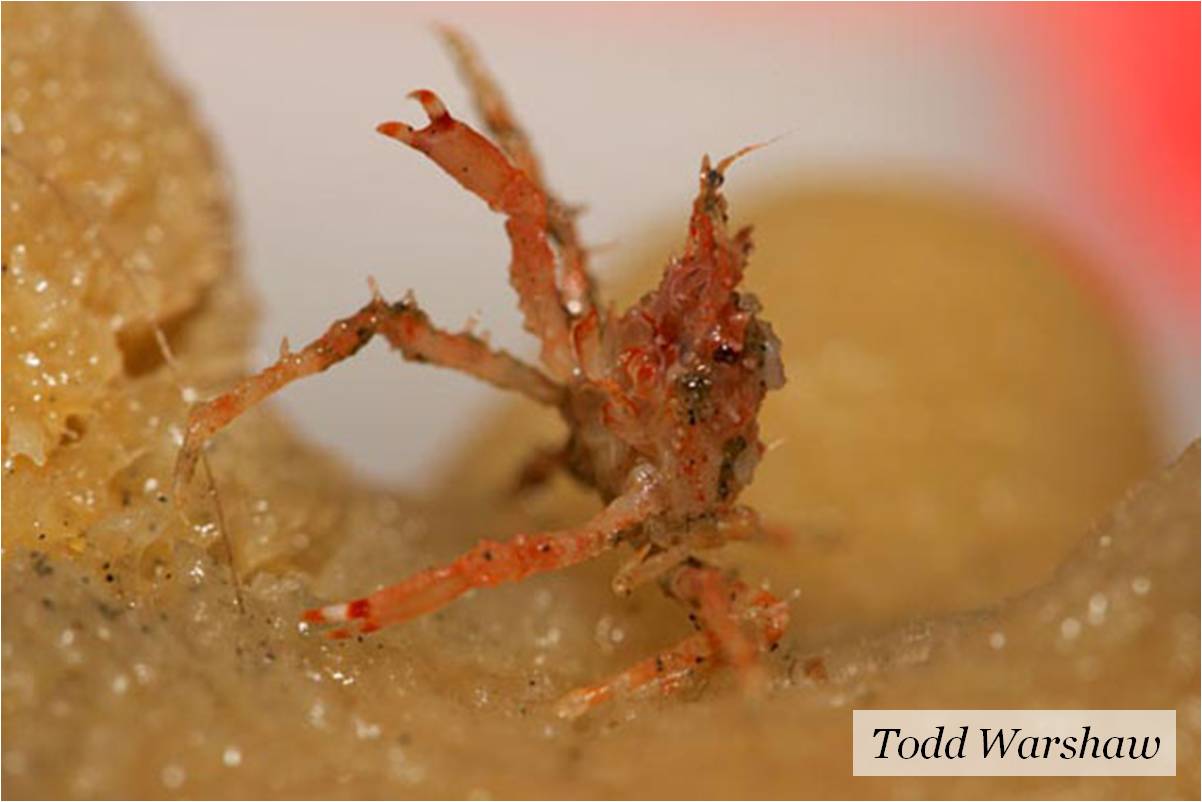
tiny decorator crab: "Hello from the Pribilofs!"

There are several species with the common name 'decorator crab', but I wanted to focus on the 'graceful decorator crab' Oregonia gracilis because it's an Alaskan local. Decorator crabs like to attach whatever is around them on their backs and legs for camouflage costume ideas.

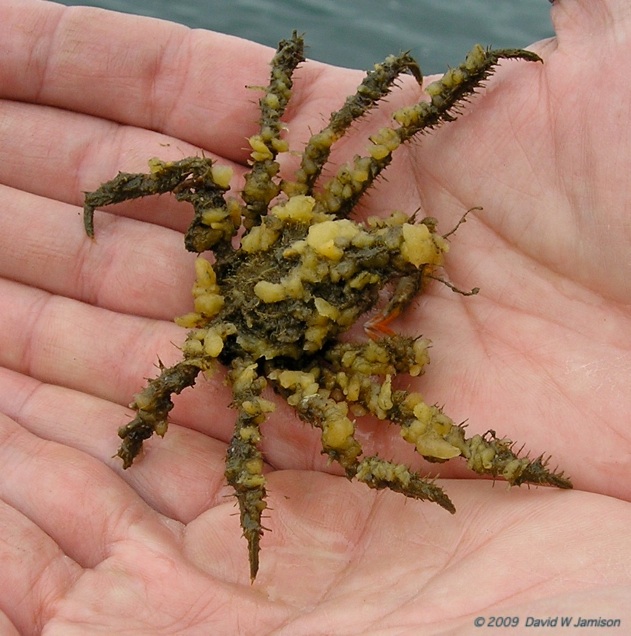
For example, this crab wants to be a sponge for Halloween:

see the hairs on his carapace and legs?
that's where he attaches his bling!

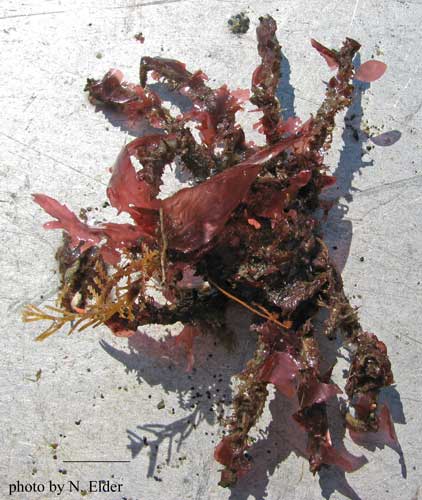
This crab wants to be red algae (or maybe a Spartan from 300??):

"Prepare for glory!"

Now, decorator crabs don't just decorate themselves for camouflage Halloween; some of the plants/animals they stick to themselves have toxins or chemical defenses that help protect the crab from predation.

Either way (camo or chemical defense), it's pretty entertaining to watch these guys dress themselves. Greg Albrecht (former snow crab student) recorded this fellow dressing up and shared it before, but it's worth a second view:


Have a Happy Halloween!

Tuesday, October 25, 2011

Halloween Inspiration

Halloween is coming up and you know what that means: more opportunities to crab it up!

I need this in Molly-size for the next time
I go pumpkin picking (from here)

You may remember the crab-dog from this post, but that pup was not alone:

she's clearly enjoying this more than he is

oh beagle, you make my day!
(disclaimer: this is a lobster-dog, not a crab dog)

Crabs aren't just for the dogs; these geniuses made amazing crab-o-lanterns!
 
this is just one of several awesome stencils

this pumpkin takes the cake! (or pie?)
I love the details!

Jen, creator of the second crabby pumpkin, also used the king crab template from here to make Halloween-themed crab pods:

Have you made any crab pods? Send 'em my way!

Alright, that's a lot of inspiration, but I'll leave you with one more, just for the humans:

*smooches*

You're welcome!