Showing posts with label IACM. Show all posts

Tuesday, January 24, 2012

Boo!

During this past year's Interagency Crab Meeting, Bob Foy (the Kodiak lab director) briefly covered all the amazing crab projects being undertaken by NMFS at the AFSC in Kodiak. One study that caught my attention over the others was a tag/dive project looking at the incidence of commercially important crab in derelict pots. An equally interesting study caught my eye at the 2012 Alaska Marine Science Symposium: it was a side scan sonar/dive survey of derelict pots in Southeast Alaska. So let's compare ghost fishing between Womens Bay off of Kodiak and around Southeast AK, and its effects on red king crab and Dungeness crab stocks!

a ghost-fishing pot with its prize: a dead blue crab
(Callinectes sapidus) from Chesapeake Bay

You may remember this post about ghost fishing in Chesapeake Bay. Ghost fishing is when gear is lost and not retrieved in the water, but still intact enough to continue catching, and killing, animals. How many crabs are being caught by derelict pots in Alaska? Let's first look at Womens Bay:

The Kodiak project was a bit longer in scale, running from 1990 to 2008. Between that time, scientists dove on 614 lost pots and found tagged red king crabs (Paralithodes camtschaticus) in or around almost 10% of those lost pots! Of the 26 tagged crabs found, 12 were dead, including 4 mature females. Hundreds of untagged crabs were spotted as well.

a derelict pot and its king crab catch

The Southeast Alaska project ran during the summers of 2009 and 2010. First researchers used side scan sonar to identify potential pots, then they dove on the sites to confirm sightings (sometimes it was just a large rock) and retrieve the derelict pots. They found 206 pots at a density of 1 - 22 pots per square kilometer (0.4 - 8.5 square miles), and up to 50% of the pots had one or more Dungeness crabs (Metacarcinus magister) depending on the area surveyed.

watch out, little crab, you're about to be Casper-fished!

So how is this phenomenon of ghost fishing affecting the crabs overall? In southeast it's estimated that 1,812 Dungies are being caught in 1,675 pots yearly, which is less than 2% of the annual commercial harvest. But in Womens Bay, it's estimated that derelict pots kill between 6 and 12% of king crab per year! Ghost fishing is not just an issue around Kodiak and Southeast; an estimated 10,000 commercial crab pots may dot the sea floor across the Gulf of Alaska and Bering Sea. That's why it's so important for commercial and recreational crab fishermen to comply with regulations, whether it calls for 18 inches of biodegradable mesh or unobstructed escape rings on the side of a pot. In the Southeast study, 91% of the retrieved pots were in compliance with an escape mechanism. (Actually, 15% of the Southeast pots were still fishing because they were so old that marine biota had overgrown any possible escape routs!)

a nice lookin' pot with some Dungies off Oregon

Abstract fun:
Ghost Fishing on King Crab in Womens Bay
Peter A. Cummiskey, Eric Munk, and W. Christopher Long

Ghost Fishing in the Southeastern Alaska Commercial Dungeness Crab Fishery (click on the Abstract Book link)
Jacek Maselko, Gretchen Bishop, and Peter Murphy

Tuesday, January 3, 2012

Hybrid crabs

You may remember me mentioning snow crabs (Chionoecetes opilio) and their congener Tanner crabs (C. bairdi) are makin' babies in the eastern Bering Sea, resulting in hybrid crabs!

hybrid: "I'm a monster!!"

Well, it's getting worse. Or more prevalent? Or just more closely looked for and then accurately identified. Something like that. Anyway, when I was at the Interagency Crab Meeting this year, Dan Urban from NMFS Kodiak updated us on the Chionoecetes hybrid situation:

Chionoecetes hybrids (#/square nautical mile) encountered
during the 2011 NMFS summer trawl survey (draft report here)

And just as I had suspected, Dan said the participants are bairdi males and opie females. Which leads me to this horrifying conclusion: the Tanners are trying to take down the snow crabs! Think about it: it's just like the English vs. the Scots:

"If we can't get them out, we'll breed them out."

It's hard to stomach, I know. And that makes our opie men kinda like these guys:

totally historically accurate.

Maybe some of you out there are romantics and are thinking, "No wait. Maybe the opies and bairdis are actually in love, even though it's forbidden!" Yeah, OK. Like maybe the opie females are from the Capulets and the bairdi males are from the Montagues and it's all very enchanting?

"My only love sprung from my only hate!" - Juliet opie female


That would be sweet, except the crabs in the eastern Bering Sea don't have a major failure in communication that leads to their untimely demise (aka heartbroken suicide). They reproduce! They make hybrid babies! And those hybrids reproduce too, albeit at lower rates (the females tend to have less clutch-fullness). So no. I'm sticking with the Braveheart analogy.

Wednesday, December 28, 2011

Get the picture?

You all know how excited I was for the Interagency Crab Meeting (see my reaction here). This year's special topic session was 

Crab Surveys in Alaska -
Current and Future Practice

Hanumant Singh from Woods Hole Oceanographic Institution was the guest speaker talking about how he applies his imaging prowess to biology and oceanography. His talk was "From Sensors to Platforms, from Data to Information - How technology can help in Benthic Surveys for Fisheries Related Activities" and he showed us wowed us with his awesome images and 3-D mapping of everything from the RMS Titanic (we're not over it yet) to king crabs heading towards Antarctica (remember reading about them here and here?) to sneaky octopus! Seriously, the octopus blew my mind. (Wait for the slow-motion reverse video, starting around 0:27.)


All amazing images aside, his take-home message was that there are several ways to survey marine populations and, while trawl/pot surveys are useful and necessary, for those areas that are too rocky or under sea ice coverage, autonomous underwater vehicles (AUV) can be a useful and surprisingly accurate tool!

harpooning: not just for mammals anymore!
(retrieving an AUV on that most stable of surfaces: the ice)

Monday, December 19, 2011

Snow crab models

Nothing reinvigorates my love for snow crabs like the Interagency Crab Meeting (I posted about last year's meeting here). So, after a fun and exciting meeting, I checked in with the blog to see what new opilio posts I had in the works, and wouldn't you know it? I just saw a talk about the article I had in my blog queue! Can you believe it?!?

so excited to be at the
World's Largest Truck Stop
Interagency Crab Meeting!

What was the talk, you're asking? Sarah Hardy's "Predicting the distribution and ecological niche of unexploited snow crab (Chionoecetes opilio) populations in Alaskan waters: A first open-access ensemble model".

crab: "I'm a model, you know what I mean,
and I do my little turn on the catwalk!"

No, not that kind of model! Sarah and her co-authors ran GIS-based open-access ensemble models. Let me (try to) break that down for you:

GIS-based = data was compiled for all sampling locations using ArcGIS, a mapping program

open-access = snow crab data that is available to anyone using both published and unpublished data

ensemble = they used a combination of 3 model algorithms' outputs in order to get the best model predictions

So what were they predicting? Snow crab presence-absence, abundance, and biomass. The abundance model didn't predict large Bering Sea populations while the biomass models were in line with Bering Sea observations. BUT this makes sense: the results of those two models may be because there were more small crabs in the southern Chukchi Sea (throwing abundance off) while the Bering Sea crabs are larger than the Chukchi crabs (keeping biomass relatively consistent with what's known). Remember we learned about size differences with respect to latitude here, here, and here already!

snow crab get smaller the farther north they are found
(snow crabs NOT to scale!)

I don't want to give away all the secrets, so if you're interested in how the presence-absence model worked out, read the published article here!

model citation:
Hardy, S. M., M. Lindgren, H. Konakanchi, and F. Huettmann. Predicting the distribution and ecological niche of unexploited snow crab (Chionoecetes opilio) populations in Alaskan waters: a first open-access ensemble model. Integrative and Comparative Biology 51: 608-622.

Tuesday, December 21, 2010

Interagency Crab Meeting 2010

Another year, another fun get-together of all the Alaskan crab researchers! There's nothing like hanging out with a room full of crab lovers (I was trying to write that phrase in latin, but it would come out as cancerphiles or something, and that just didn't express the right message).

This year the meeting highlighted Crustacean Enhancement and Genetics,
with these presentations:

Developing genetic fingerprinting techniques for lobster seeding trials in New England - Rick Wahle (University of Maine) [I love lobsters and got to work with them on Long Island!]

Some population genetic considerations for red king crab management in Alaska - Dave Tallmon

Update on genetic studies of snow and king crabs at ADF&G - Stew Grant

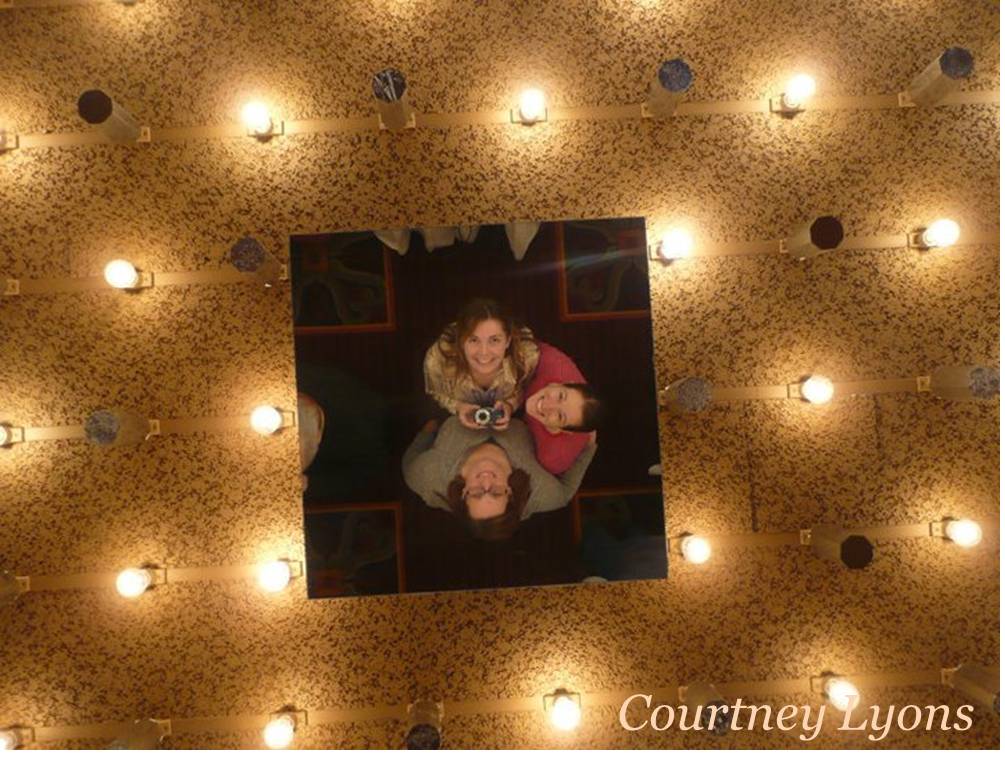
three crab girls enjoying the sights:
Courtney Lyons, Miranda Westphal, and me

Student presentations included:

Evidence of predator-induced behavioral plasticity of juvenile red king crab (Paralithodes camtschaticus) - Ben Daly

Qualitative modeling of the Pribilof Island blue king crab fishery - Courtney Lyons

Growth of juvenile red king crab, Paralithodes camtschaticus, in Alaska - Miranda Westphal

Interannual variability in pre-hatch fecundity of eastern Bering Sea snow crab, Chionoecetes opilio - Matt Catterson

Defining population structure of snow crab (Chionoecetes opilio) - Greg Albrecht

Gonadosomatic index in male snow crab, Chionoecetes opilio, from the eastern Bering Sea: another look - Molly Zaleski (me)

Variability in reproductive potential of eastern Bering Sea snow crab with environment and stock demography - Joel Webb (the host with the most)

# Effects of ocean acidification on larval development in Alaska Tanner crabs (Chionoecetes bairdi) – Raphaelle Descoteaux

# Ecosystem-based fisheries management and population dynamics of the collapsed, Yakutat Bay Dungeness crab (Cancer magister) stocks in Southeast Alaska: A proposal – Jared Weems

# poster presentation