Showing posts with label video. Show all posts

Monday, August 12, 2013

Talk about brain freeze!

This poor little Chionoecetes crab was wondering around the sea floor, minding his own business, when something tempting bubbled up in front of him, just begging to be eaten. Little did he know that it was actually a methane seep. Little did I know that methane bubbles, at that depth and pressure, could become frozen solids! The skin of the methane bubbles, methane hydrate, froze to the crabs chela and mandibles as the crab was trying out this strange new treat frozen gas bubble.

The video, captured by the Monterey Bay Aquarium Research Institute, is a little dry (which is surprising for an underwater video! Hey-oh!) but if you wait about 1 minute into the video, you'll see the little gas-mustachioed crab:


You can almost hear him going, "What the!?!?" Luckily it looks like he can still move his mouth parts and has full use of his claws, so hopefully this has just taught him to be a little less adventurous when trying new foods.

PS - I'm not entirely sure, but I'm willing to bet that this guy is a Chionoecetes tanneri, or grooved Tanner crab. (Thanks for making me guess, MBARI! You know how I am with scientific names!) The clues? Thanks to my Biological Field Techniques for Chionoecetes Crabs (Jadamec et al., 1999), I first looked at the way the crab's sides jutted out.


"oh, hi!"

We can tell that he's not Chionoecetes opilio or C. bairdi because his branchial region sticks out farther than the area below, called the lateral margin. Next, his carapace has a deep notch in the branchial ridge as opposed to a shallow one with a little spine in the middle on C. angulatus or a super shallow interspace on C. japanicus.


You can even make a T (for tanneri) by putting an imaginary line across the top of his branchial ridge:


see it?

What do you think? Either way, he's a cute crab with one heck of a story to tell his friends!

(Thanks to Ashwin Sreenivasan for the link!)

Friday, September 21, 2012

Did I mention I like to dance?

It's been a fun-filled family week for Snow Crab Love here in Juneau (hence the slow-down on posts) but I'm back today to share this video right on time for the weekend! It's sort of a follow-up video from Christopher Paparo on his photobombing lady crab: a male lady crab (Ovalipes ocellatus) showing off his moves!


Quite the twinkle toes, am I right? He could be the next Psy (minus the horses)!


Friday, September 7, 2012

Halimeda!

I wake up almost everyday and sing, "Hal - imeda!" Is it because I love calcareous green algae?

I first learned about this while diving in Fiji.
(It's a tough life, I know.)

Partly, yes. It's my way of saying good morning to my beloved goldfish, Halimeda, named after the aforementioned algae. I got her back in 2010 when I was TA-ing Biology 310. Goldfish tails are perfectly translucent enough to study blood movement through their veins under different conditions. Every student got to take their fish home if they wished, but luckily for me there was one extra! Not only is she a dear member of our family, she's also the inspiration for this Crabday's crab:

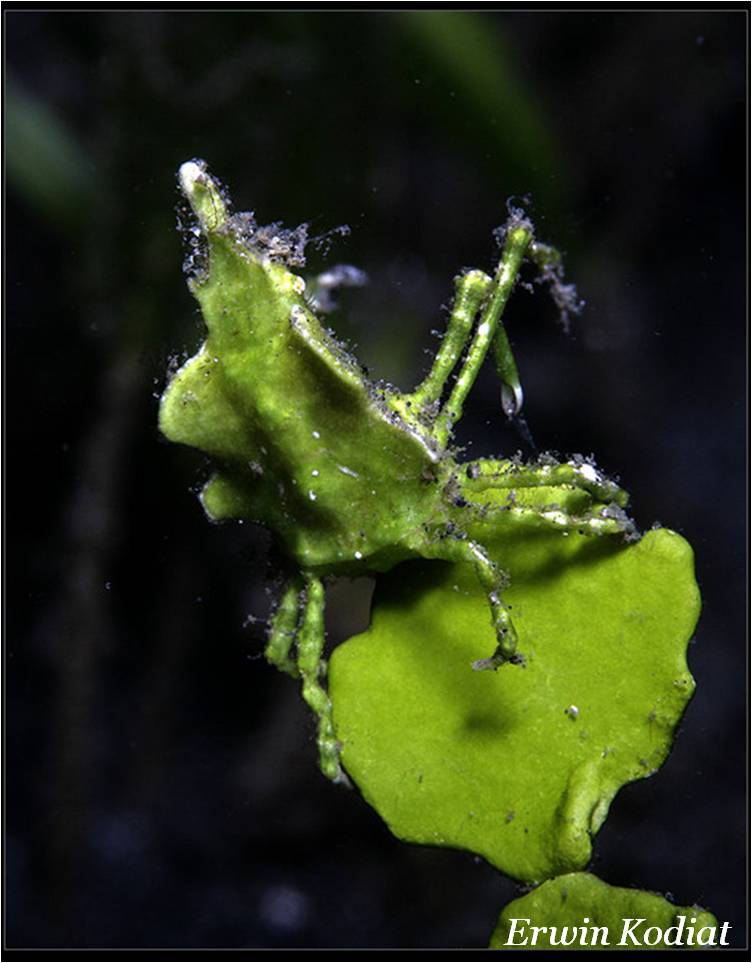
Halimeda Crab
Huenia heraldica

Eee! It's so tiny and so green!

These little crabs are kind of like the decorator crabs we've seen before (here) in that they like to decorate their bodies with bits of the algal halimeda. And, I mean, why wouldn't they, when they look so good!

"I'm going for a 'Dumbo' type look." - halimeda crab

These arrowhead crabs live around the Indo-Pacific, but from the looks of things, probably stay in areas with little-to-no currents:


See how he moves in the water? It's like having a big ol' umbrella attached to your face! Which might look cool... if you're a crab...

Wednesday, June 6, 2012

The sea otter debate

Dungeness crabs are important animals for fishermen up here in southeast Alaska. However, there is increasing concern that fishermen are going to have to compete more and more with another predator: the sea otter! Students at UAF are looking into this relationship between predators and their prey (mentioned briefly here), and had an opportunity to make a short film about the potential conflict.


What do you think?

Tuesday, May 15, 2012

NOAA's Sea Week

The last 3 weeks were "Sea Week" at NOAA's Ted Stevens Marine Research Institute. Hundreds of kids got to come through the labs and learn about some of the sea creatures that call Alaska home. I got to visit too (since I work there) and took some pictures to share with you!

 the touch tanks had many different animals:
snails, sea cucumbers, hermit crabs, and blue mussels to name a few

 two orange hermit crabs (Elassochirus gilli)
hanging with a sea cucumber (Parastichopus californicus)

I was smitten with this orange guy!

 "Oh dear, I've rolled over!"

 a beautiful blue friend

 a darker fellow (Elassochirus tenuimanus)

Hermit crab molt! You can see, because of their soft abdomen,
that the hard parts they have to molt are only on the 
front portion of their bodies! So cool! 

 there were also some sweet lyre crabs

and scallops! Can you see its many little eyes?

The scallops were a lot of fun because they are really quite active when they sense predators, like this large pycnopodia sea star:


I hope you enjoyed the virtual tour of TSMRI's touch tanks!

Tuesday, January 10, 2012

Future crab biologist

One day a little girl approached her dad with the idea to strap his iPhone into the bottom of their crab pot to video tape crab behavior.

And the dad said, "OK"!

Dad (Mike Adamick), you're pretty awesome. Not too many dads would willingly strap their iPhones to bait that has, in the past, been snatched away by sea lions. Bravo, sir! And Emme, you're a pretty clever little girl. (I like your hat, too.)

Now, science is a fun roller coaster ride of trial and error, so their video wasn't as exciting as they might have hoped, but the point is they did it! And it had a happy ending (for most involved...). So here it is, for your viewing pleasure:


Hooray for Cancer crabs and cheeky sea lions, and hooray for inquisitive little scientists!

Wednesday, December 28, 2011

Get the picture?

You all know how excited I was for the Interagency Crab Meeting (see my reaction here). This year's special topic session was 

Crab Surveys in Alaska -
Current and Future Practice

Hanumant Singh from Woods Hole Oceanographic Institution was the guest speaker talking about how he applies his imaging prowess to biology and oceanography. His talk was "From Sensors to Platforms, from Data to Information - How technology can help in Benthic Surveys for Fisheries Related Activities" and he showed us wowed us with his awesome images and 3-D mapping of everything from the RMS Titanic (we're not over it yet) to king crabs heading towards Antarctica (remember reading about them here and here?) to sneaky octopus! Seriously, the octopus blew my mind. (Wait for the slow-motion reverse video, starting around 0:27.)


All amazing images aside, his take-home message was that there are several ways to survey marine populations and, while trawl/pot surveys are useful and necessary, for those areas that are too rocky or under sea ice coverage, autonomous underwater vehicles (AUV) can be a useful and surprisingly accurate tool!

harpooning: not just for mammals anymore!
(retrieving an AUV on that most stable of surfaces: the ice)

Thursday, December 8, 2011

What's better than a picture of a yeti crab?

Videos of multiple yeti crabs!!

You'll remember from here that the yeti crab is actually a squat lobster, but that didn't stop me from freaking out about how cute and fluffy they look. And now my friend John (from this post) clued me in on some footage of yetis in their natural environment doing what they do best: looking adorable!


I know the second one doesn't have a catchy tune, but I like the way the fight ends: with more dancing. Way to go, yeti crab! Way to go.

Thursday, October 20, 2011

Alaska Day and Oil Spills

Happy (Belated) Alaska Day! It was on October 18th, so I'm a little late (again), but I hope everyone had a great day and a great week celebrating the 49th state! What did you do? I graded salmon and rockfish skeletons for how accurately each bone was identified (I'm TA-ing Ichthyology over at UAS)!

Since this Alaska Day is so close to the 18 month anniversary of the Deepwater Horizon oil spill (which occurred April 20, 2010), and Alaskans know a thing or two about the lasting effects of oil spills, I thought it'd be interesting to check in on how the Gulf of Mexico crustacean populations are doing today. Just because, you know, this happened:

a ghost crab on the shore line (picture from this photographer)

a dead blue crab floating in some oil

a little hermit crab trying to make its way through the muck

So what's happening now? A lot of the oil has been consumed by microbes (go microbes!) but there's still a layer of oil and ashes from the burned oil on swaths of the Gulf of Mexico sediment (via a report from the Gulf of Mexico Research Initiative, funded by BP). This layer could affect any benthic animal, like, say a crab, who may walk around and dig through the oil layer to forage for food. That foraging behavior was also a concern in Prince William Sound after the Exxon Valdez oil spill: researchers were worried about sea otters digging in the sediment for their prey and, in the process, dispersing the settled oil throughout the water column and onto themselves.

a ghost crab amid the oil, glowing under UV light
(to help with clean-up and all... the light, that is... not the crab)

Lingering oil may affect growth, reproduction, and ultimately survival, but Gulf of Mexico fisheries continue as long as the animals are deemed safe for consumption. It may be tricky to estimate spawning biomass for subsequent stocks, since there's little background data available about the spawning habits of crabs and shrimp around the Gulf, and so much is unknown about potential effects of oil on their reproductive physiology, but we'll just have to keep an eye on how those fisheries progress the next few years. There may still be hope: as far as crabs go, those that survived the spill may have one more trick up their sleeves:


For an interesting first-person account of an oil spill back in Alaska you can listen to Dune Lankard of Cordova's reaction to the Exxon Valdez oil spill here. Alaska Day: not just for celebrating, but also for learning!

Tuesday, June 14, 2011

FA!

No, not a long long way to run. (I'll wait for people to get that. Got it? Good.)

FA stands for farnesoic acid, and I've been running it in the lab to make sure that what I'm looking at in my snow crab hemolymph truly is methyl farnesoate (MF) and not FA. (Remember, MF is a crustacean reproductive hormone. I'm hoping to quantify levels of MF in various groups of snow crab males to see how the terminal molt affects their reproductive physiology.)

FA is the precursor to MF. See how similar they look?

two sesquiterpenoids: MF (top) and FA (bottom)
see how they compare to the insect juvenile hormone III here

For more fun, long, sciencey words: MF comes from FA through the methylation of the latter, which is catalyzed by farnesoic acid O-methyltransferase (FAMeT)! Thrilling I know.

The good news is, after running different levels of FA through the HPLC, I am ever the more confident in my MF results! Yay for anagrams, and yay for me!

Monday, April 18, 2011

Celebrating Boston!

Today is that most special of special days for marathoners: BOSTON!

In honor of the oldest annual marathon (this is the 115th Boston Marathon!), I wanted to take a closer look at a Boston crab (no, not the wrestling position):

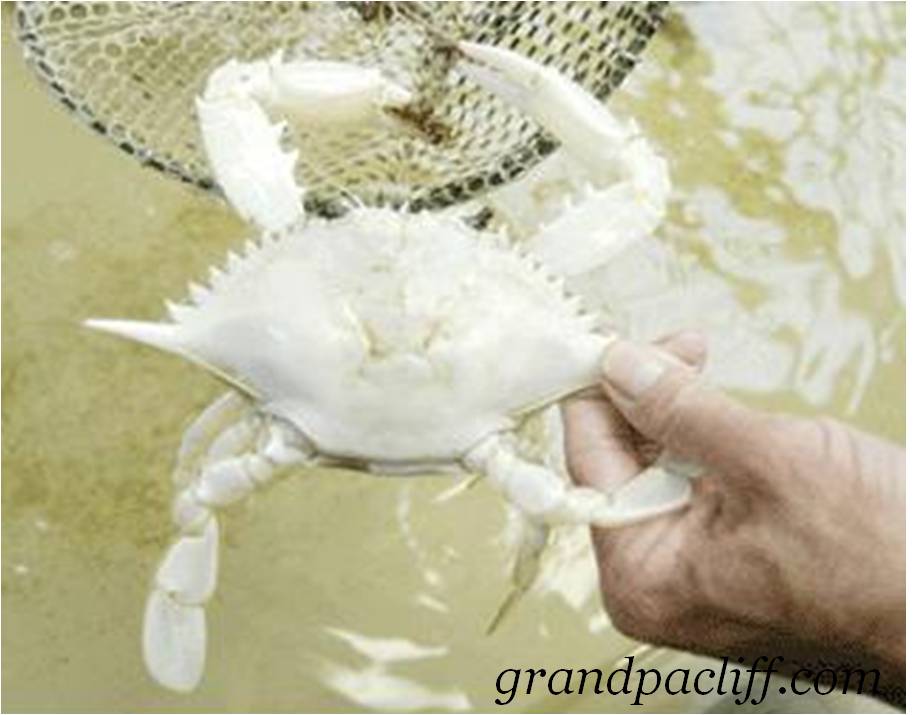
Blue Crab  
(Callinectes sapidus)!

a beautiful Callinectes sapidus

What? An albino blue crab?? You know it!

You can fish for these while visiting Massachusetts. (Or you could try your hand at recreational lobstering, but all I have to say is good luck with that one!) These crabs are true athletes, although they are better known for their swimming abilities than marathon running. See their little paddles on their modified fourth walking legs? Their scientific name even refers to this, meaning "savory beautiful swimmer".

Here's a blue crab eating a clam (I wanted to post a video of one running/swimming, just to keep with the spirit of the day, but the original video was removed from youtube):


Yikes, I hope she waits before running after that meal!

Monday, February 14, 2011

Happy Valentine's Day

Happy Valentine's Day to all you crab lovers out there!


In honor of the day, I thought I'd share my favorite happy-love song, and wouldn't you know it, there are crustaceans in it!


(If you haven't made a card for your Valentine yet, you can print out the card from the end of the mantis shrimp blog!)

Wednesday, February 9, 2011

SICB Lessons: Mantis shrimp are AWESOME

this Odontodactylus scyllarus is just oozing awesomeness

OK, OK, this isn’t really something I needed to learn at a conference, but this fact is reinforced every time I go to SICB. That’s because I get to see presentations about these cool stomatopods from Sheila Patek and her lab. They look at the muscle physiology and mechanics of mantis shrimp raptorial appendages. You can read the 2010 abstract here and the 2011 abstract here. The main take-away message is that mantis shrimp are super fast and wicked strong!


[This is a long video, but really interesting if you have the time.]

I also learned that, within 8 genera, there are monogamous mantis shrimp (at least for one breeding season) from Molly Wright with UC Berkeley. So that means that we can stop worshipping those pesky penguins as our models for (eternal) love!

I sketched that guy, so sorry if it's not entirely accurate

(Feel free to use this card for your loved ones:
1. Download it and print it out on white card stock, trimming any edges
2. Fold on the grey dashed line
3. Write something meaningful inside like, "... at least for this year" or "I smashed some snails just for you! Love, Me" (that last one would be great if you have escargot on hand))

I linked up to the XLV Carnival of the Blue:

Wednesday, January 26, 2011

Happy Australia Day!

I was going to share a paper with you about snow crabs, but when I looked at my calendar I saw that today is Australia Day (like Columbus Day for the States, so a bit controversial if I understand it correctly). So I’ve decided to celebrate an awesome Australian crab: the GIANT CRAB Pseudocarcinus gigas!

Bo Jones with a P. gigas off of Tasmania
(I got to meet him at the Lowell Wakefield conference in '09!)

The giant crab (aka Australian giant crab, giant Tasmanian crab, king crab OR queen crab) is a deepwater species that can grow up to 14 kg! Despite that, most are harvested around 4 kg, with male and female size limits = minimum carapace length of 150 mm and maximum carapace length of 215 mm. The nice thing is that, given females can be harvested too, berried females are illegal and have to be thrown back.

giant crab enjoying the seafloor

The fishery started in Tasmanian waters in 1990 and then in South Australian waters in 1992, so it’s a relatively young fishery. The giant crabs are sold either live, fresh green (ie dead), cooked, or pickled, and mostly exported.

historical catch of giant crabs for the South Australian fishery

Unfortunately, at least in 2006, an assessment of the fishery declared it “growth overfished” (other fishery info here and here). In the meantime, they are managed for their fishery and as by-catch in the rock lobster fishery.


Have a great day and good luck to the giant crab!

Friday, December 24, 2010

Merry Christmas!

How fitting is it that the most wonderful time of the year has its own island (Christmas Island) and that island is also called “the kingdom of the crabs” and “the crabbiest place in the world”? Two happier things couldn’t be combined!

Coconut crab (Birgus latro)
(photos from ag.gov.au)

Christmas Island red crabs (Gecarcoidea natalis)
heading to sea

Christmas Island is home to 20 terrestrial and intertidal crabs, including coconut crabs (a personal favorite: I’ve seen these guys in the Solomon Islands) and red crabs. The latter are famous for their massive march to the sea from their jungle home:


(I strongly encourage you to watch all the National Geographic videos on the red crab migration [millions of crab babies!!], but I’ll warn you now: you will come to hate yellow crazy ants!)

SO MANY BABIES!

Red crabs undergo an incredible physiological change when embarking on their journey: they have to get their muscles from couch-potato to marathon-runner, which involves changes in their gene expression (rather than an 18 week training program. Lucky!). Scientists from the University of Bristol just published an article on red crab leg muscles, and it is covered quite splendidly here.

I’ll leave you with my take on a Christmas Island Christmas tree:

HAPPY HOLIDAYS!

Red crab reading:
Postel, U., F. Thompson, G. Barker, M. Viney, and S. Morris. 2010. Migration-related changes in gene expression in leg muscle of the Christmas Island red crab Gecarcoidea natalis: seasonal preparation for long-distance walking. Journal of Experimental Biology 213: 1740-1750.

Saturday, December 18, 2010

Ask A Grad Student: Greg Albrecht

Don't let the fish throw you off; Greg is a true crab lover all the way! While not studying snow crab genetics, he's playing dress-up with decorator crabs. He's a model for the rest of us!

Age: 27

Degree: MS Marine Biology

Current City: Fairbanks

1. Describe your project, in 4 sentences or less.

My project focuses on defining the genetic population structure of snow crab within the Bering, Chukchi and Beaufort Seas. I'm using 7 microsatellite markers and have 613 samples collected from 13 locations. The hypothesis I'm testing is that due to their long distance larval dispersal abilities the entire stock will have low genetic differentiation. This is an important question for management of the current fishery and figuring out what's going on in the arctic.

a lovely C. opilio

2. Have you come across any opilio-bairdi hybrids, and if so, have you included them in your genetic analysis? In your opinion, are they truly 2 separate species (C. opilio and C. bairdi) , or simply subspecies of one another? Let’s fuel the debate!

To my knowledge, none of the crabs sampled were hybrids; however, that's hard to tell since identifying them can be difficult especially if they aren't first generation. Genetic techniques can be used to distinguish the two, or at least what portion of each species they are; however, we didn't conduct any of those tests or collect any Tanners, which would have been necessary.

So yeah... a species: they are typically defined by two animals that can interbreed and produce fertile offspring; however, that means that opies and bairdis would be the same. There are other examples of this like the cutthroat and rainbow trout that make a cutbow hybrid. So, to the best of my knowledge (which is just basically Wikipedia and asking the grad student in the office next to me) often times genetics and the ecological niche that they fill are used to define the species. Opilio and Tanner crab have different habitat limitations (mostly based on temperature) and although they overlap, I don't think a Tanner would stand a chance in the Arctic. So with that and the significant differences we see in their DNA (at least at this point... given that hybrids don't rule the Oceans... yet) we can say they are still different species.

Now as to "subspecies" well that's kind of a fuzzy line in my opinion. I think that technically subspecies can interbreed, but don't very regularly due to behavioral differences and ecological barriers (i.e. dogs and wolves). In my opinion, Tanners are still morphologically differentiated in a number of ways (size being one big one) and at this point are still defined by different habitats (thermal tolerances).

3. You have also been studying decorator crabs and their decoration choices. What led you to this work and what’s the weirdest thing you’ve seen a decorator crab choose?


I have long thought decorator crabs to be cool, but diving in Kachemak Bay this past summer gave me an opportunity to start a small study on their behavior. I have found flagging tape, viable fish eggs and of course lots of algae on crabs; however, the funniest finding was a crab sampled from a location containing a mix of algae and trash (95% and 5% cover, respectively) who had placed a piece of an old windshield wiper on his carapace.

decorator crabs showing off their flair

4. You eventually want to teach high school: why? (What sparked this interest?)

So that I'll have summers off to play with decorator crabs and go fishing... oh yeah, and I guess to "inspire" the next generation.


 oh snap!

I'm inspired!

5. What is your favorite piece of crab paraphernalia?

My crab pot

crab on!

Thanks, Greg! And I have some great crab dip recipes, just in case you don't know what to do with all that king crab. Just saying. 

Monday, November 29, 2010

Shanghai hairy crabs revisited

After posting my last blog, I thought more about crab vending machines, and tried to look at it with an open mind. I found this AP video that explains the vending machine better than most of the ones I was watching in Chinese or Japanese (go figure):


I also, admittedly, like to read comments on YouTube videos, and some of them made me think:

"The only difference between these cold-but-living crabs and the ones in restaurant supply rooms is that the public can see them." --  I personally have eaten freshly killed and cooked lobsters, Dungeness crabs, and red king crabs, so I shouldn't be so squeamish, should I? The difference would be that I’ve never held them in tiny boxes and forced them into a hypothermic state before eating them. Food for thought. (Ha!)

"I'm a brit living in Nanjing and saw this machine the first time the other week. To be honest it didn't surprise me. And by China standards, it's quite humane. The crabs are kept cold so they sort of hibernate then they wake up when you get them out of the machine. Compared to the conditions that other live produce are kept in (i.e. fish and frogs and terrapins sitting in dirty water, sometimes with other dead animals in the same tank), this seems to be a step forward for China." -- Interesting point. My friend Kat has been touring Asia and witnessed a lot of different conditions for other live animals. Maybe these crabs are lucky.

"Finally a way to defeat the GIANT ENEMY CRAB!" -- NO! WRONG! Thumbs down on your opinion, buddy!!

An Alaskan opinion found here.

There's still the question of management, but I like taking a fresh look at difficult topics! What do you think?

Friday, November 12, 2010

Ask A Grad Student: Ben Daly

Ben Daly lives in Seward, AK, working with the Alutiiq Pride Shellfish Hatchery raising baby king crabs from fertilized females collected in the field. He will also soon be raising a baby of his own! Congratulations!!

Age: 29

Degree: pursuing PhD in Fisheries

Current City: Newport, OR

1. Describe your project, in 4 sentences or less.

My project explores the feasibility of king crab stock enhancement in Alaska. Specifically, I am looking at ways to optimize hatchery production of juvenile crabs. I am also developing release strategies for juvenile crabs.


2. Your lab is in Seward but you are currently working in Newport, Oregon. What is a challenge you’ve had to overcome with this location change (and how)?

The biggest challenge in working in other labs is learning how the seawater systems work in terms of supply, filtration, temperature control, etc. For example, at the Newport Lab, the seawater temperature is controlled by adjusting heat exchangers, which is impacted by the flow rates into the various tanks containing crabs, fish, etc. Changing the flow in one tank can affect the temperature in other tanks. To adjust for this, I have had to be very careful in maintaining flow conditions in my experimental tanks.

3. You take all of your classes through video-conferencing. What would be your top 2 tips for other distance students?

1. Try to participate in class (ask questions, make comments) as much as possible. This keeps you feeling involved with the other students and the professor. It also reminds them that you are a real person and not just a face on a TV screen.

2. Bring coffee to stay alert. It can be easy to become distracted or to lose focus.

4. Has raising baby king crabs prepared you for raising baby humans?

Ben: Yes, raising baby king crabs is preparing me for raising humans. The crabs require daily care, especially as larvae. The larvae are very sensitive to temperature fluctuations and an inadequate food supply, just like baby humans. One nice thing about baby crabs: they don’t cry.

Beate (wife): No, not unless the baby crabs need to be nursed or have their diapers changed!

"Feed me!!"

5. What is your favorite piece of crab paraphernalia?

We try to limit our crab paraphernalia as it can get out of hand due to gifts from relatives. Right now our favorite piece is our crab “welcome mat”, which has a big picture of a blue crab. Sometimes it can feel good to stomp on the mat with my boots to get out any built-up animosity towards the crabs……..just joking……..I love the crabs.

Thanks Ben!

Tuesday, August 31, 2010

A full crab is a happy crab

I love feeding my crabs, seeing them clamber for some yummy fish, and running around triumphantly with their claws in the air holding up their prize. Here, Adam and I caught some pink salmon in Echo Cove and wanted to share our catch with my boys:


Friday, August 13, 2010

Chivalry's not dead

While I’m glad I’m not a female snow crab, male snow crabs can defend females for mating, not just for munching.


This guy was in it to win it, even going so far as lifting the female out of the water to keep her from the other male! What a fighter!